

Friend,
I hope you had a wonderful weekend and stayed warm and safe with all the snow. I spent some time catching up on wrapping presents and enjoying the holiday season, while also reflecting on the work ahead for our community as we head into the new year.
This week’s newsletter includes the following topics:
- New Assisted Suicide Law Creates Serious Safety Concerns
- Governor Signs Controversial “Decoupling Bill,” Raising Taxes on Illinois Job Creators
- Illinois Law Signed to Establish State-Specific Vaccine Guidelines
- Illinois Small vs Large Businesses
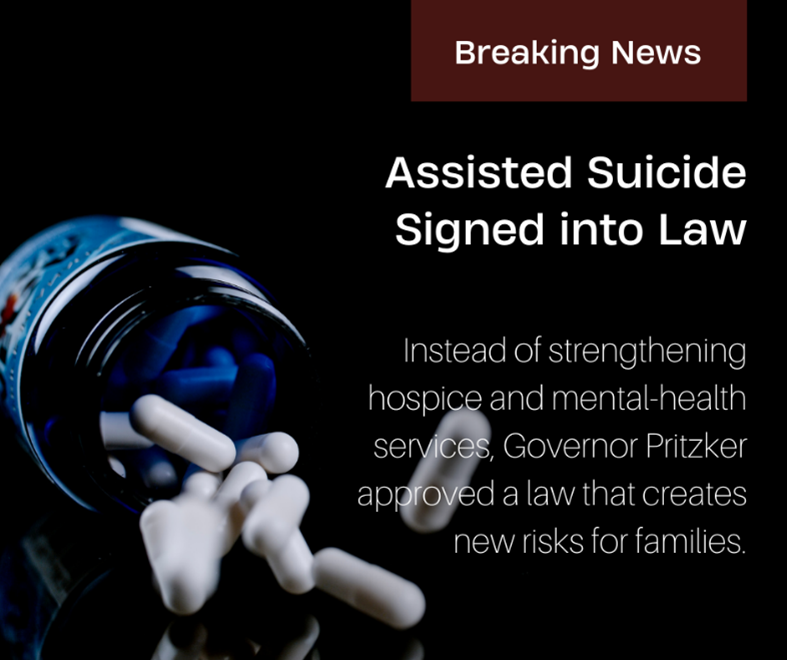
New Assisted Suicide Law Creates Serious Safety Concerns
Governor Pritzker has signed a new law that allows terminally ill patients to request medication that will end their lives. While this is an emotional issue, the law contains significant risks that should concern all Illinois families.
The medication can be taken without a doctor even being present. There is no clear process for ensuring leftover doses are secured or removed. Seniors, disabled individuals, and those without strong support systems may feel pressure to choose this option even if they would prefer more care or more time. In addition, a coroner cannot state, on a death certificate, that the person decided to take their life. Instead, the coroner has to state the cause of death that a person has been diagnosed with. This presents a very large ethical issue for the coroner.
Illinois should be expanding access to hospice services, palliative medicine, and mental health treatment. Instead, the state created a pathway that carries serious safety concerns and could place vulnerable people at risk.
I remain deeply concerned about introducing a culture of death into Illinois.
Having watched both my parents pass peacefully in hospice, I believe true compassion means protecting life and caring for the vulnerable, not hastening death.
I will continue to stand for dignity and safeguards at life’s end.
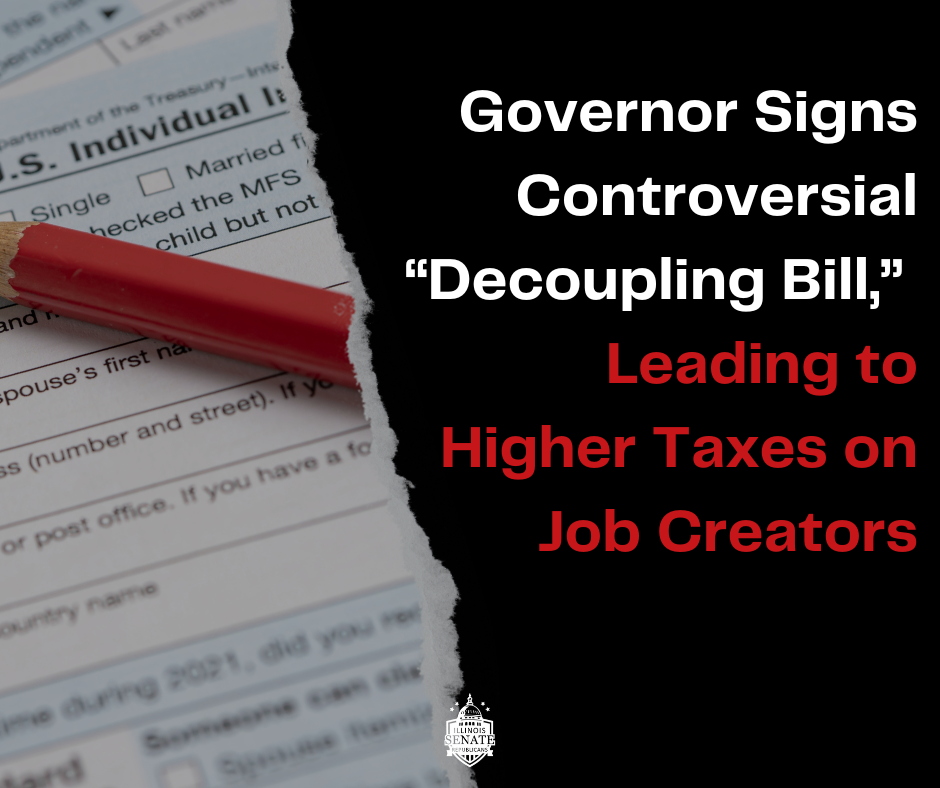
Governor Signs Controversial “Decoupling Bill,” Raising Taxes on Illinois Job Creators
On Friday, December 12, Governor Pritzker signed Senate Bill 1911 into law, finalizing a major tax increase on Illinois businesses, manufacturers, and other job creators. The new law “decouples” Illinois from federal tax relief measures that were designed to help employers grow and compete, effectively raising taxes at a time when many businesses are already struggling to survive.
Critics warn that this new policy will make Illinois even less competitive compared to other states that are cutting taxes and attracting new investment. They note that Illinois already faces one of the highest unemployment rates in the nation and say this tax hike sends a clear message that the state is moving in the wrong direction.
I believe the Governor’s decision prioritizes short-term revenue over long-term economic stability. This so-called “decoupling” will raise costs, drive business opportunities out of the state, and make it harder for families to get ahead at a time when Illinois should be focused on growth and competitiveness.
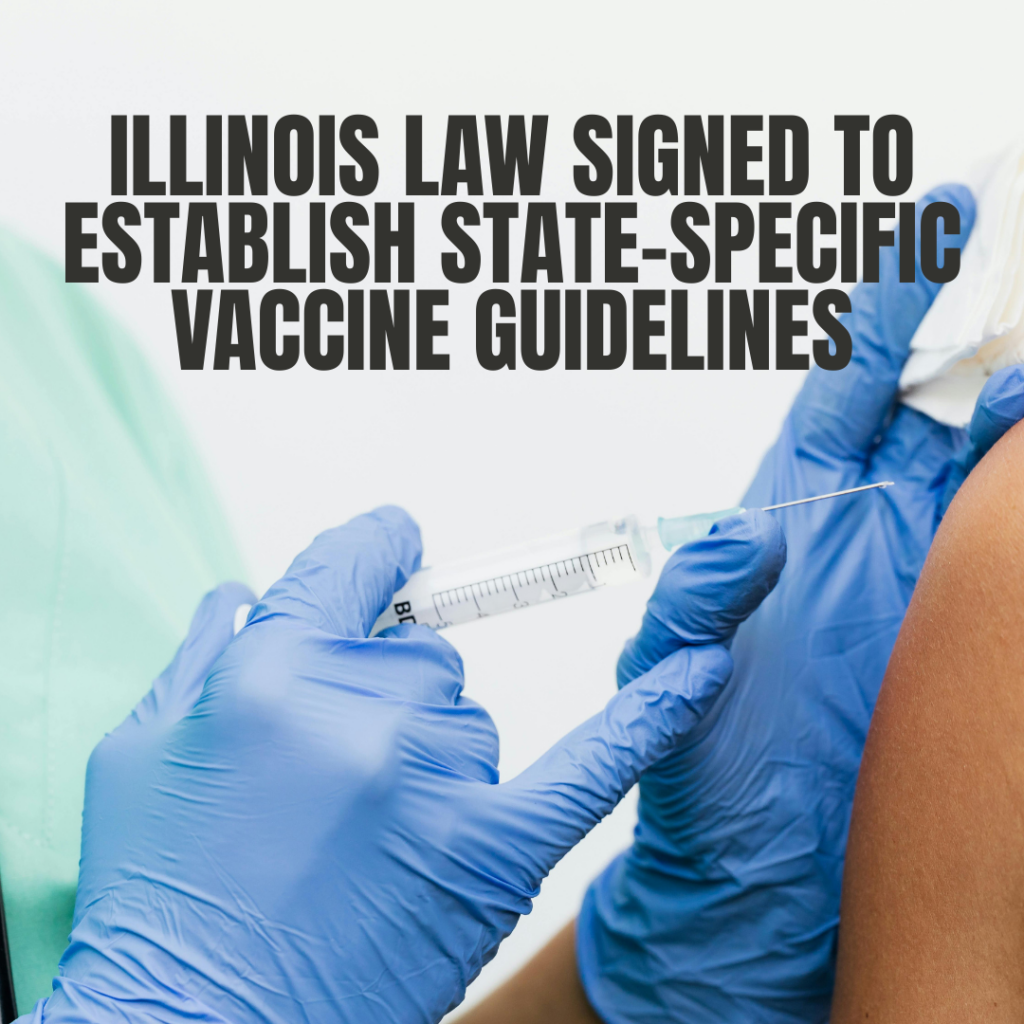
Illinois Law Signed to Establish State-Specific Vaccine Guidelines
Last week, Governor Pritzker made a controversial shift in public health policy, signing into law a bill that grants the Illinois Department of Public Health (IDPH) the power to issue its own vaccine guidelines, separate from the CDC.
House Bill 767 mandates that state-regulated insurance plans cover vaccines recommended by IDPH, even if they diverge from federal standards. It also allows children as young as three to receive vaccines without a prescription and broadens the scope of IDPH expertise by no longer limiting it to CDC-affiliated experts.
Critics say the move risks politicizing vaccine policy and creating public confusion. By stepping away from the CDC’s consensus-driven framework, Illinois could create inconsistencies in care and coverage, with unclear long-term consequences. Lawmakers have urged more transparency and coordination, warning that going it alone may undermine trust in public health guidance.
The law follows an executive order by Pritzker earlier this year, after the FDA rolled back support for certain COVID-19 vaccines.
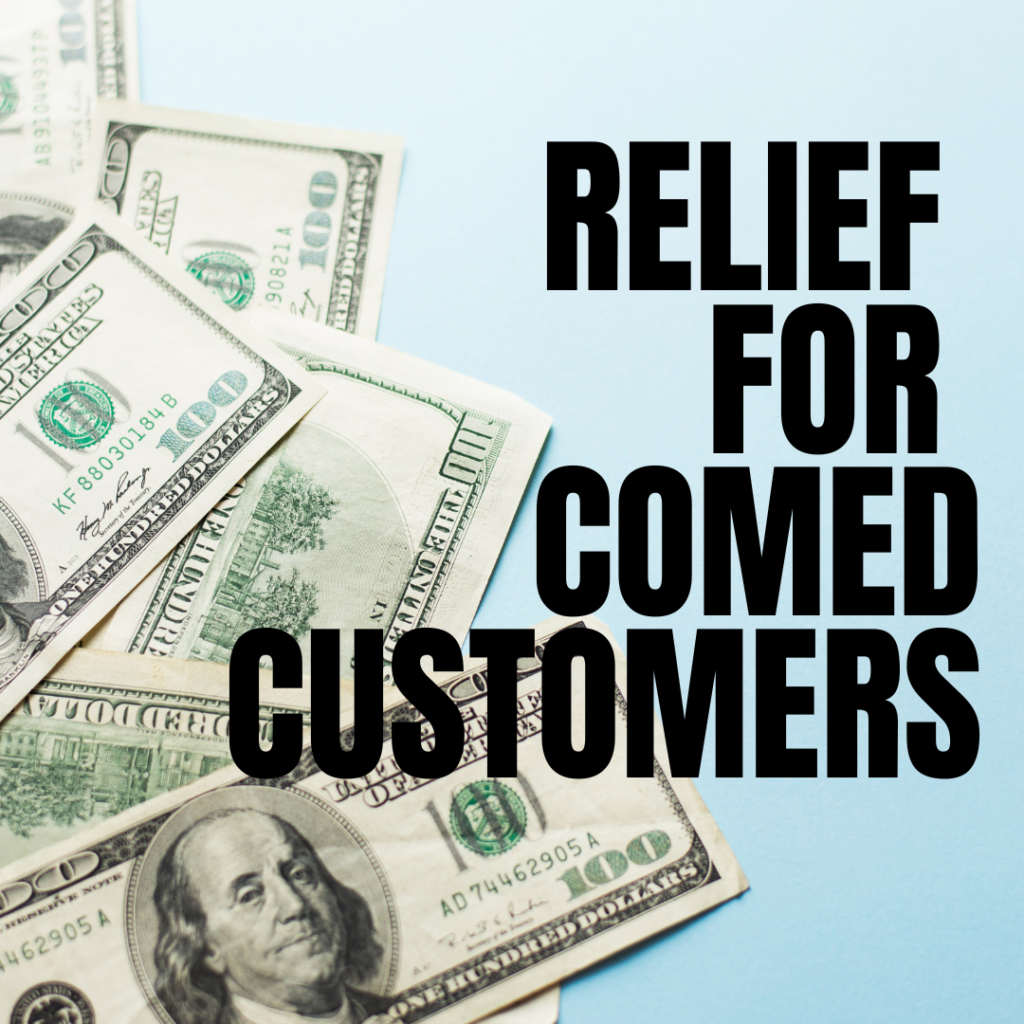
Relief for ComEd Customers
I am pleased to announce that more than $803 million will be returned to ComEd customers under a 2021 law that requires nuclear plants to issue credits when energy prices are high. Residential and commercial customers will see these savings as automatic bill credits, with the average household receiving about $13 per month for the first five months of 2026, depending on usage.
These credits come through the Carbon Mitigation Credit program, created to support carbon-free nuclear generation while protecting customers from overpaying if market prices rise or federal support becomes available. The program runs through 2027 and adjusts bills based on energy prices. No action is required to receive the credit, and current market conditions suggest the program will continue providing relief for at least another year, helping offset supply costs and support families during economic uncertainty.

Illinois Small vs Large Businesses
Small businesses are leading Illinois’ job recovery, accounting for nearly all net new jobs since the pandemic and adding almost 19,000 positions in 2025 alone. While these employers continue to grow and raise wages, many large companies have not returned to pre-pandemic employment levels.
At the same time, Illinois is seeing continued layoffs among larger employers. This contrast underscores the need to support small businesses while improving Illinois’ overall business climate. I am going to continue to work on policies that reduce regulatory burdens, strengthen tax competitiveness, and invest in workforce development are critical to sustaining job growth and long-term economic stability.
Read more at the Illinois Policy Institute.